A walk through the flat-bar all-rounder category from the outside in, built from shop visits, test rides and a few years of owning one. Written so the next person can skip the guesswork.
A general-purpose flat-bar bike bought for errands and a bike path does not fail all at once, it wears in a fairly predictable order, and once you know that order you can budget for it instead of being surprised by it. The parts that go first are cheap, the parts that go later are less cheap, and the difference between the two is mostly how quickly you noticed. What follows is the sequence a careful owner watches, in the order it usually arrives, with a note on which jobs reward two or three tools and which are better handed over.
1. The rear tire, well before the front one
Your weight sits behind the middle of the bike, and the rear wheel does the driving, so the rear tire squares off across the center tread while the front still looks close to new. The check is simple: spin the wheel, look at the crown of the tread from directly above, and see whether the round profile has flattened into a strip. Look also for cuts holding grit, and for a sidewall that has gone gray and slightly fuzzy. Buying two tires at once and rotating nothing is the usual approach, but a single rear tire, fitted at home with plastic levers, is the cheapest repair on this whole list.
2. The chain, which is cheap right up until it isn't
Chains stretch as their pins and rollers wear, and a stretched chain slowly reshapes the teeth of the cassette and chainrings to match it. Replace the chain on time and you buy a chain. Ignore it through a wet winter and you buy a chain, a cassette, and possibly a chainring, plus the shop time to fit them. A wear gauge is small, inexpensive, and the single best tool a new owner can own, because it turns a judgment call into a yes or no. Checking it every month or two, and after any long stretch of rain, is enough.
3. Brake pads, checked with a flashlight and a fingernail
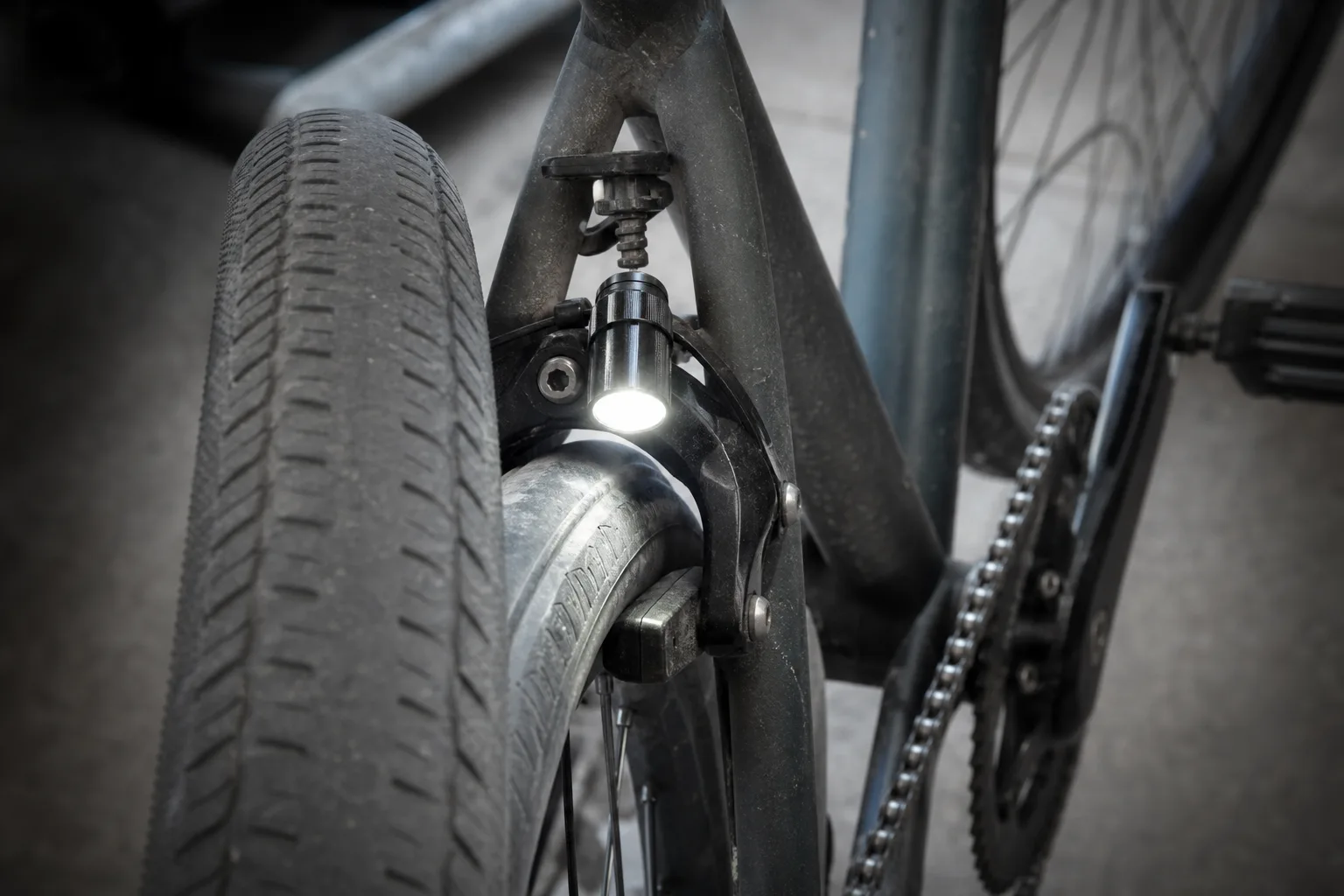
Rim brake pads show their wear openly: the grooves cut into the rubber disappear, and once they are gone the pad is done. Disc pads hide, so a small flashlight aimed into the caliper, looking for the friction material left on the backing plate, is the honest check. A thin dark line means order pads now, not later, because a pad worn to metal will score a rotor and turn a small purchase into a larger one. Pad swaps are within reach at home on most bikes. Bleeding a hydraulic system is shop work, and worth paying for.
4. Cables, housing, and the slow drift nobody notices
Shift quality does not usually collapse, it degrades, a little more hesitation each week until you have stopped using two gears without deciding to. The cause is almost always grit and moisture inside the housing rather than a failing derailleur. A full set of shift and brake cables with fresh housing is an inexpensive parts purchase and a moderately fiddly afternoon, and most shops price it as a set job rather than by the hour. If you learn one thing beyond patching a tube, learn barrel adjusters, the knurled fittings where a cable enters a shifter or derailleur, since a quarter turn fixes most of it.
5. Wheel truing, and the rest of the shop's column
A wheel that rubs one brake pad once per revolution has a bend measured in fractions of a millimeter, and correcting it means adjusting spoke tension around the whole rim, not just at the wobble. That is a stand, a dish gauge, and practice. Truing, bottom bracket and headset service, hydraulic bleeds, and anything threaded into the frame belong on a shop bill, usually quoted as a flat rate per job with parts on top. The Consumer Product Safety Commission is responsible for the federal requirements that govern how bicycles are assembled and sold, which is part of why a shop build is worth what it costs.
6. Where the bike sleeps rewrites every line above
A bike kept indoors, dried after wet rides, will run one chain where an outdoor bike runs two or three, and its cables may last as long as the owner keeps it. Left under a porch through a humid summer, the chain rusts between rides, housing corrodes from the inside, and saddle covers crack. A cheap fix exists: a wall hook in a hallway, or a hard-sided cover with airflow underneath. Owners who bring the bike inside consistently report the smallest bills, and that single habit does more for running cost than any component upgrade.
Keep a note of the date and mileage each time something is replaced, taped inside a cabinet or kept in your phone, and within a year you will know your own intervals better than any general guidance can tell you.