A walk through the flat-bar all-rounder category from the outside in, built from shop visits, test rides and a few years of owning one. Written so the next person can skip the guesswork.
The two bikes in the catalog photo share a silhouette because the silhouette is the cheapest part of a bicycle to get right. A flat handlebar, a sloping top tube, two triangles and a pair of 700c wheels have been settled geometry for decades, and any factory can weld that shape. What separates the bikes is a list of parts printed in small type below the picture, written in a shorthand that assumes you already know it. A careful reader learns to read four lines of that list closely and skim the rest.
Wheels and tires, which is where most of the difference gets spent
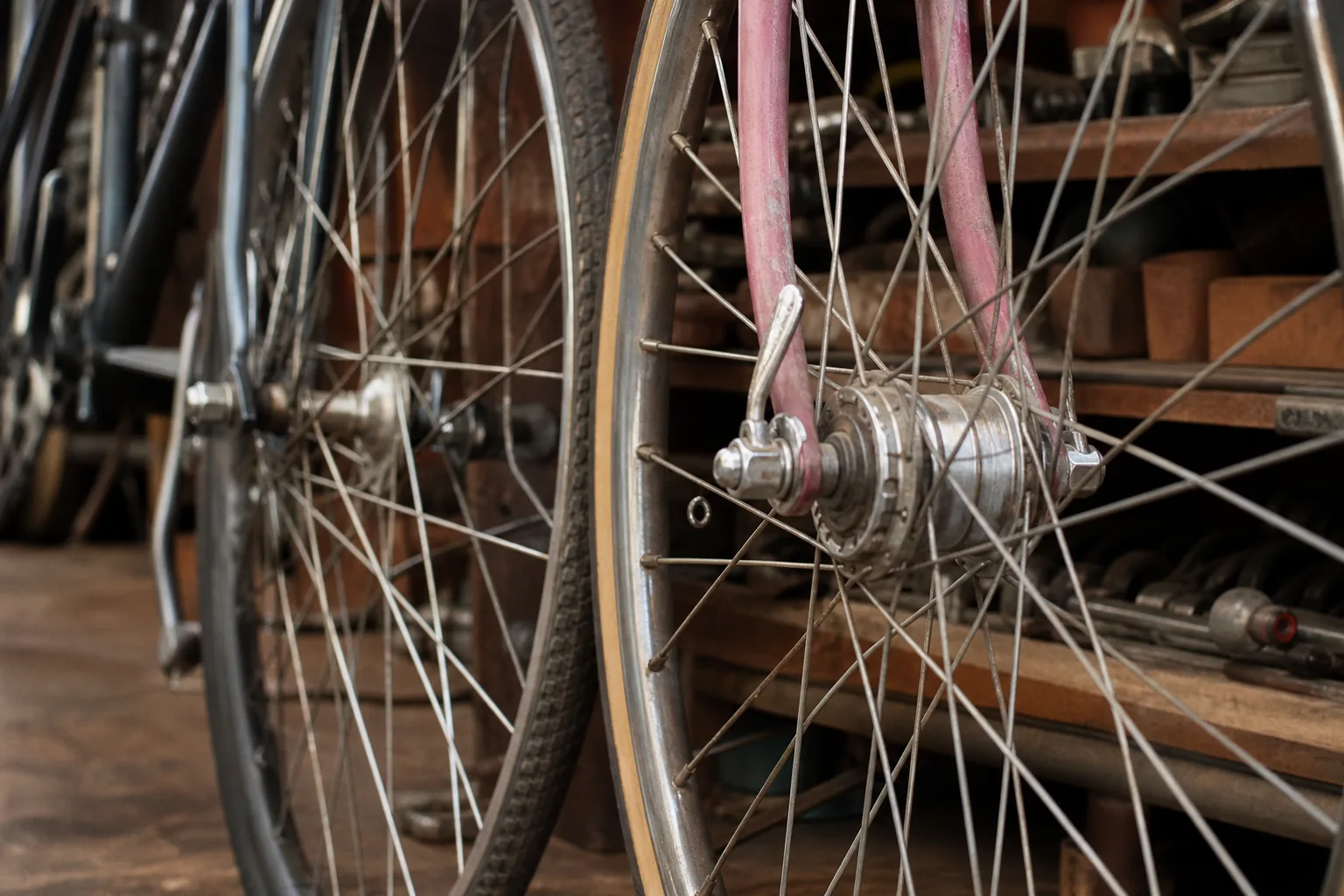
Rotating weight at the rim is felt every time you leave a stop sign, and cheap wheels carry it in the worst place, in a thick extruded rim and a heavy steel-hubbed build. The upgrade you feel is not exotic. It is a lighter rim, a hub with cartridge bearings rather than loose balls in a pressed cup, and spokes tensioned evenly by a machine that was checked afterward by a person. Tires matter even more, since casing suppleness, measured in threads per inch, decides whether the bike floats over chipseal or hammers through it.
A budget bike almost always ships with a wire-bead tire built for warehouse durability, stiff, heavy, and slow to conform to anything. The same bike at twice the price gets a folding bead, a lighter casing, and usually a tubeless-ready rim, meaning the rim bed is shaped to seal without an inner tube. Whether you ever go tubeless matters less than the fact that the rim was made to a tighter tolerance. If you check one line on a spec sheet, check the wheel and tire line, because that is the ride.
Brakes and fork, felt in the hands and over broken pavement
Mechanical disc brakes pulled by a cable will stop you, and on a dry commute they stop you fine, but they demand pad adjustment as the pads wear and they lose feel when the cable housing gets old and gritty. Hydraulic discs, standard once a bike crosses into the middle band, self-adjust, need a fraction of the hand force, and hold their feel through a wet November. That difference shows up on a loaded bike with groceries on the rear rack, on a descent, and for anyone with small hands or arthritic thumbs. The Consumer Product Safety Commission oversees bicycle braking requirements for bikes sold in this country, so both systems clear a floor; the gap is in modulation and upkeep.
Front suspension is the other place cheap parts actively hurt. A coil-sprung fork with no damping adds four or five pounds, flexes under braking, and gives back very little on the light gravel most of these bikes see. A rigid fork, or an air fork with a real damper, is a better outcome at either end of the range. If a bike in the lowest band has a suspension fork, read that as the manufacturer spending your money on a feature that photographs well.
What is mostly badge value
Shifter and derailleur tier is the most oversold line on the sheet. A well-adjusted entry drivetrain shifts cleanly, and the gains going up the ladder are lighter parts, crisper detents, and longer life, none of which change how the bike feels rolling down the street. Frame material claims deserve the same skepticism, since aluminum alloy designations describe the metal, not the tubing shapes, the butting, or the welds that determine ride quality. A carbon fork is worth something for road buzz, but a good steel or aluminum fork with sensible rake is not far behind. Buy the wheels and brakes, tolerate the drivetrain.
Bringing a cheap bike up, and knowing when to stop
Tires and a proper tune are the highest-return money anyone spends on a budget flat-bar, usually a modest fraction of the purchase price, and the bike feels transformed. Better pads, fresh cables and housing, and a saddle that suits you come next, still cheap. The line gets crossed at wheels and brakes, because a wheelset plus a hydraulic brake conversion approaches a large share of what the bike cost, and you have spent it on a frame with a heavy fork you still want to replace. At that point the honest math favors selling and buying up.
Read the spec sheet as a budget document. It shows where the manufacturer chose to spend, and the bikes worth your money spend it on the parts that touch the road.